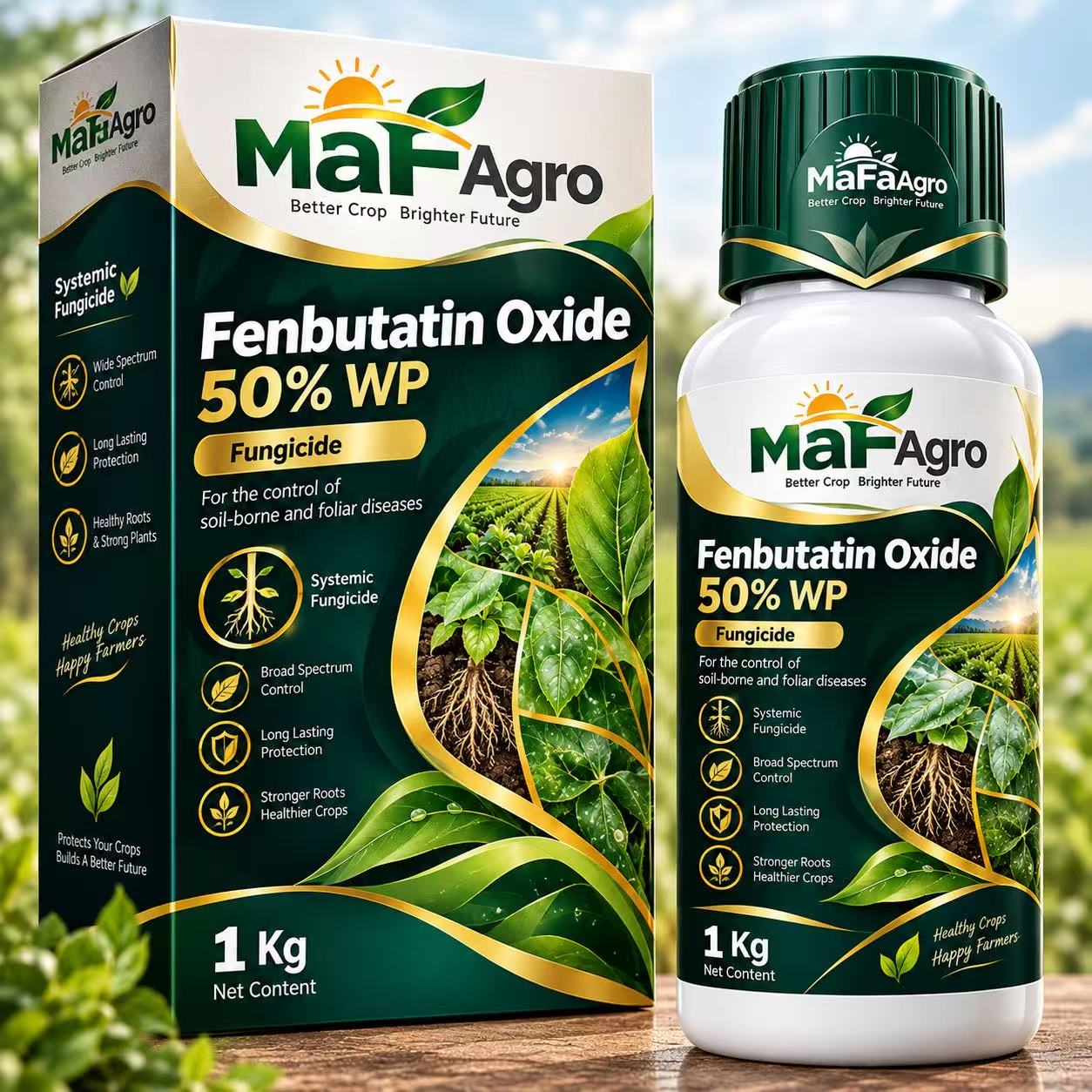
Single-Ingredient vs. Formulated Fungicides: How Should Distributors Choose?
Single-Ingredient vs. Formulated Fungicides: How Should Distributors Choose?
When deciding between single-ingredient and formulated fungicides, distributors should first consider the target crop, major diseases, and local application conditions. When a single active ingredient can meet specific control needs and the label permits its use as planned, a single-ingredient product can fulfill a clear role; when a proven combination of active ingredients offers complementary disease coverage, ease of use, or value in resistance management, formulated products warrant further consideration. For both types of products, it is essential to verify registration requirements, actual application costs, and quality specifications.
For importers, distributors, and private-label clients, this choice also impacts inventory management, packaging, channel training, and future restocking.
Your product line needs a clear division of roles: what problem each product solves, why customers choose it, and what documentation suppliers can provide to support these decisions.
First, categorize into single-ingredient products, pre-formulated mixtures, and field-mixed formulations
Single-ingredient fungicides contain one active ingredient. They can be used against one or more registered diseases, with the scope of control depending on the ingredient itself, product specifications, and the approved label.
Pre-formulated fungicides contain two or more active ingredients, with the concentrations, ratios, and formulation system predetermined by the manufacturer. Distributors purchase a complete commercial formulation but must still verify the efficacy, quality, and scope of application for this combination.
Field tank mixing involves the user adding different products to the same spray tank. This process may differ from the formulation system, adjuvants, and validation conditions of pre-formulated mixtures, so it is necessary to verify label requirements, compatibility, and application conditions. A single small-scale compatibility test cannot fully demonstrate efficacy, crop safety, or suitability for registered uses.
Another concept that is often confused: “Single-active-ingredient” refers to the number of active ingredients, while “single site of action” refers to the mode of action. For example, Mancozeb is available as a single-ingredient product but is classified under the M03 group (multiple-site action) in the FRAC classification. Therefore, not all single-ingredient products should be assumed to have only one site of action.
What are the differences in purchasing single-ingredient versus formulated fungicides?
You can use the table below to narrow down your options before comparing specific products.
| Comparison Criteria | Single-Ingredient Fungicides | Pre-formulated Fungicide Mixtures |
|---|---|---|
| Product Composition | One active ingredient | Two or more active ingredients; proportions determined by product specifications |
| Scope of Control | Depends on ingredient activity and approved label | Depends on evidence for each ingredient and their combination; may provide complementary coverage |
| Treatment Regimen | Facilitates assigning product roles based on a specific ingredient; mixing and rotation are performed according to relevant requirements | Fixed combination; requires confirmation that all ingredients meet target requirements |
| Ease of Use | Use as directed on the label; in some scenarios, combination with other products may still be required | Reduces on-site mixing steps when using multiple active ingredients simultaneously |
| Resistance Management | Verify modes of action, local resistance patterns, and the entire application regimen | Verify whether different ingredients form an effective combination against the target pathogen |
| Cost Assessment | Consider pricing, application rates, and the cost of necessary combinations | Evaluate pricing, application rates, and the actual value provided by the combination |
| Quality Verification | Active ingredient concentrations and applicable formulation specifications | Active ingredient concentrations, formulation stability, and applicable formulation specifications |
A single-ingredient formulation may offer a broad spectrum of control, while a formulated mixture may be suitable only for a specific scenario. By first defining the product’s role and then comparing commercial terms, it becomes easier to identify options suitable for local distribution channels.
Under what circumstances should you consider a single-ingredient fungicide?
When the local market has a clear demand for a specific ingredient, the target diseases are relatively well-defined, and the product’s efficacy and application conditions are well-supported, a single-ingredient product typically allows for a clear sales positioning.
For example, if your customer is already familiar with a particular product and consistently restocks it in the same specifications, stable quality, appropriate packaging, and clear acceptance criteria may have a greater impact on the partnership than adding new ingredient combinations.
A single-ingredient product can also serve as one component of a comprehensive pest management program. You need to verify when it should be applied, which products with different modes of action it should be rotated with, and whether there are any requirements for mandatory combination use.
Purchasing a single-ingredient product does not mean using the same ingredient continuously and exclusively throughout the entire season. The product’s commercial formulation and field application procedures must be evaluated separately.
When selecting a single-ingredient product, it is recommended to focus on confirming the following:
- Is the target disease within the scope of the locally approved label?
- Do local efficacy reports support continued use of this ingredient?
- Is the product’s role in the control program clearly defined?
- Are there requirements for compatible mixing partners, or restrictions such as application frequency?
- Do packaging, pricing, and distribution channel requirements support consistent restocking?
Under what circumstances is it worth considering a fungicide combination?
The reasons for evaluating a combination must be specific to the disease and application scenario.
One scenario involves complementary disease coverage. Suppose a fruit or vegetable market needs to manage two types of diseases during a similar timeframe; if a proven combination can meet these needs, a combination product may simplify product selection. If the control windows for the two disease types differ, the role of that combination in the management strategy must be reevaluated.
Another scenario involves complementary active ingredient characteristics. Different active ingredients may complement each other in terms of protective action, translocation within the plant, or disease coverage. Corresponding labels and efficacy data must support such value; it cannot be inferred solely from the names of the active ingredients.
Another scenario involves resistance management. A combination only offers meaningful resistance management value when the paired ingredients exhibit sufficient activity against the same target pathogen and meet the corresponding modes of action and application requirements.
For distributors, pre-formulated mixtures may also reduce the steps involved in separately measuring and mixing multiple ingredients for simultaneous application. However, this convenience must be evaluated alongside product cost, actual demand, and training requirements.
Two active ingredients do not necessarily represent two different modes of action
When reviewing formulated products, first check the FRAC group for each ingredient.
The following examples from the FRAC 2026 classification table can help illustrate this distinction:
| Ingredient Combination | FRAC Group | How Should Distributors Interpret |
|---|---|---|
| Prochloraz + Tebuconazole | 3 + 3 | Since both active ingredients belong to the same mode-of-action group, they cannot be described as two independent modes of action |
| Azoxystrobin + Difenoconazole | 11 + 3 | Includes two different mechanism-of-action groups; the efficacy of each ingredient against the target diseases must still be verified |
Formulations within the same group may offer value in terms of disease coverage or product performance, but these benefits must be verified separately. Formulations combining ingredients from different groups also require further examination; a determination should not be based solely on the presence of two different codes.
Complementarity in disease coverage and complementarity in resistance management are two distinct issues. If one ingredient primarily targets disease A and the other primarily targets disease B, this combination may broaden the scope of control; however, it does not necessarily provide effective protection against disease A through the combined action of both ingredients.FRAC’s recommendations for mixtures emphasize that combinations used for resistance management must consider cross-resistance, as well as the efficacy of each component against the target pathogen at actual application rates. AHDB also notes that the suitability of pre-formulated mixtures for resistance management must be assessed on a disease-by-disease basis.
If one of the active ingredients no longer provides sufficient control locally, adding another active ingredient will not automatically restore an effective resistance management combination. Suppliers should be able to explain the product’s positioning and the evidence supporting it, while customers need to provide local usage history and efficacy feedback.
When rotating products, it is also important to examine the active ingredients and their groups. Different brands and product names may still belong to the same mode-of-action group. Formulations should also comply with approved labels and applicable resistance management recommendations.
Compare costs per hectare to determine if a quote is appropriate
Comparing products based on prices per liter or per kilogram only covers part of the procurement comparison.
A more practical calculation method is:
Product cost per hectare per application = CIF unit price per liter or kilogram × application rate per hectare permitted by the local label.
When making comparisons, try to ensure consistency in crop type, target disease, and control objectives. If a single-component product requires combination with other products in the planned scenario, the cost of the combination should be included in the calculation. When comparing treatment plans across an entire growing season, also consider the number of applications permitted by the label, application intervals, and other inputs.
Total active ingredient content must also be analyzed separately. Even if the total active ingredient content of a formulated product is the same, the content and proportions of individual components may still vary; furthermore, the efficacy of different components cannot be simply judged by their percentage content.
Distributors should also consider several commercial factors:
| Cost Factors | Items to Confirm |
|---|---|
| Actual Control Costs | Labeled Application Rates, Necessary Companion Products, and Treatment Schedules |
| Packaging Costs | Whether specifications align with local distribution channels; whether custom packaging affects minimum order quantities |
| Inventory occupancy | Seasonal demand, restocking cycles, and functional overlap among products |
| Channel support | Whether additional product descriptions, label explanations, or technical training are required |
| Acceptance and After-Sales Service | Are specifications clear? Are batches traceable? How are exceptions handled? |
A higher-priced product may still offer reasonable commercial value if it aligns with local demand. Conversely, a lower-priced product may incur additional costs down the line if its positioning is unclear or procurement specifications cannot be confirmed.
Before placing an order, verify the ingredients, dosage forms, documentation, and packaging
Once the ingredient profile has been selected, the procurement process moves on to the specific specifications phase.
For compound formulations, it is recommended to verify the content of each active ingredient separately. Meeting the total content requirement does not guarantee that each individual ingredient complies with the agreed-upon specifications.
Dosage form performance is equally important. For SC formulations, focus on applicable indicators such as suspension, redispersibility, and pouring; for EC formulations, focus on emulsion stability; and for WG formulations, focus on indicators such as wetting, dispersion, and suspension. The final test items, methods, and limits should be determined based on the specific product and agreed-upon specifications.The FAO/WHO pesticide specification framework also considers active ingredient content, applicable physicochemical properties, and storage stability as key elements for quality verification. During procurement, these requirements should be applied to specific products and acceptance criteria.
| Verification Items | Recommended Items to Confirm with Suppliers |
|---|---|
| Product Identity | Complete and valid active ingredient names, content of each active ingredient, units, and formulation |
| Active Ingredient Testing | Test results, methods, and corresponding batches for each active ingredient |
| Formulation Quality | Applicable criteria, testing methods, acceptance limits, and sample results |
| Storage Stability | Test conditions, test duration, and relevant test results |
| Technical Documentation | Product specifications, TDS, SDS/MSDS, and other available relevant documentation |
| Registration and Labeling | Verification of alignment with requirements for the corresponding product, source of manufacture, and target market |
| Packaging and Traceability | Filling volume, sealing, labeling, lot number, and consistency among documents |
The COA is used to verify batch specifications, efficacy data supports pest control performance, and registration documents verify registration information. Each type of document serves a specific purpose and should be verified separately during procurement.
Sample approval should also be based on agreed-upon specifications. First, determine the test methods and acceptance criteria, then confirm the samples; for bulk orders, continue using the same acceptance criteria and verify the actual batch documentation.
When confirming your procurement needs with us, please provide both the specifications and the requirements of the destination country. This way, the product, documentation, labeling, and packaging can be verified item by item within the same project.
How should distributors structure their single-ingredient and formulated product lines?
Product lines can be organized by role. A formulated product with established, stable demand may serve as a staple for restocking; a single-ingredient product with a clearly defined target may be your entry point into a specific market.
| Product Roles | Key Considerations for Product Selection |
|---|---|
| Regular Stock-Filling Products | Clear local demand, stable specifications, facilitating continuous procurement and channel sales |
| Products for Specific Pests or Diseases | Clear control focus, with efficacy evidence corresponding to the target scenario |
| Alternative or Rotation Products in the Solution | Verify the mode of action, efficacy against the disease, and corresponding application requirements |
| Private-label products | Ensure consistent execution of product positioning, packaging specifications, label language, and documentation |
Procurement quantities should be determined based on demand forecasts, registration requirements, existing inventory, and budget; there is no need to set a fixed ratio between single-ingredient and formulated products.
For each new product added, first answer this question: What need does it fulfill in the existing product line? If the products differ only in name but have highly overlapping active ingredient groups, uses, and customer bases, the value of stocking them must be reevaluated.
For private-label customers, it is also necessary to confirm that product specifications, labels, and packaging are clearly differentiated to facilitate distributor presentations and user identification.
Frequently Asked Questions
Are mixed fungicides always more effective than single-ingredient formulations?
This must be evaluated on a disease-by-disease basis. Efficacy depends on the activity of the ingredients, local resistance, timing of application, formulation, and application conditions. Adding an ingredient may provide complementary coverage or convenience, but the claim that it is “more effective” must be supported by corresponding efficacy data.
Do two active ingredients necessarily represent two different modes of action?
Not necessarily. Both Prochloraz and Tebuconazole belong to FRAC Group 3. When determining the mode of action, check the FRAC classification of each ingredient and then verify cross-resistance and activity against target diseases.
Can the same mixed-formulation product be used consecutively?
Determine this based on the locally approved label and applicable resistance management recommendations. A mixed formulation does not imply unlimited consecutive use, nor does it mean that label rates can be reduced at the user’s discretion.
Requirements may vary depending on the active ingredient group, crop, and pathogen.
What is the difference between pre-formulated mixtures and field tank mixes?
A pre-formulated mixture is a commercial formulation with a fixed composition; the manufacturer determines its content, proportions, and formulation system. A field tank mix involves the user blending different products; while this may offer greater flexibility, it requires verification of labels, compatibility, efficacy, and crop safety conditions. Even if the active ingredients have the same names, this does not guarantee that the two methods will yield identical product performance.
How to verify that bulk products match the samples?
Agree on complete specifications, testing methods, and acceptance criteria before sample confirmation. For bulk orders, verify ingredient analysis, applicable formulation specifications, batch COA, packaging, and traceability information. Sample results and commercial batch data should be evaluated according to the same set of standards.
Identify the Right Fungicide Products for Your Market
If you are evaluating fungicides for import, distribution, or private-label projects, please provide Mafa Agro with the following:
- Destination country and local registration status.
- Target crops and major diseases.
- The active ingredients, concentrations, and formulations you plan to purchase.
- Expected purchase quantities and packaging specifications.
- Brand, label language, and technical documentation requirements.
Based on the specific product and project conditions, we will verify available specifications, documentation, and packaging options to help you narrow down your selection and identify the next items to evaluate.
Tell Us What You Need
Looking for pesticide products from China? Send us the active ingredient, formulation, quantity, packaging requirement or target crop. Our team will help you evaluate suitable supply options.